Friday, December 12, 2025

Love in the Courtroom of Heaven

Love in the Courtroom of Heaven

Judgment is not God hunting for reasons to condemn—it's God revealing, before the universe, why salvation is just.

Many Christians hear the phrase “Investigative Judgment” and imagine a God searching for reasons to condemn. Scripture, however, presents a very different picture of divine judgment. The Bible consistently portrays God as just, transparent, patient, and relational. Judgment in Scripture is never arbitrary, never impulsive, and never disconnected from God’s saving purpose.

This does not mean that God lacks knowledge. Scripture is explicit that nothing is hidden from Him. “No creature is hidden from His sight, but all are naked and exposed to the eyes of Him to whom we must give account” (Hebrews 4:13). When Scripture describes God as seeing, coming down, or opening books, it is not describing divine uncertainty. It is revealing how God governs morally, relationally, and publicly.

Thursday, December 11, 2025

The Prayer of An Unknown Confederate Soldier

The Prayer of an Unknown Confederate Soldier

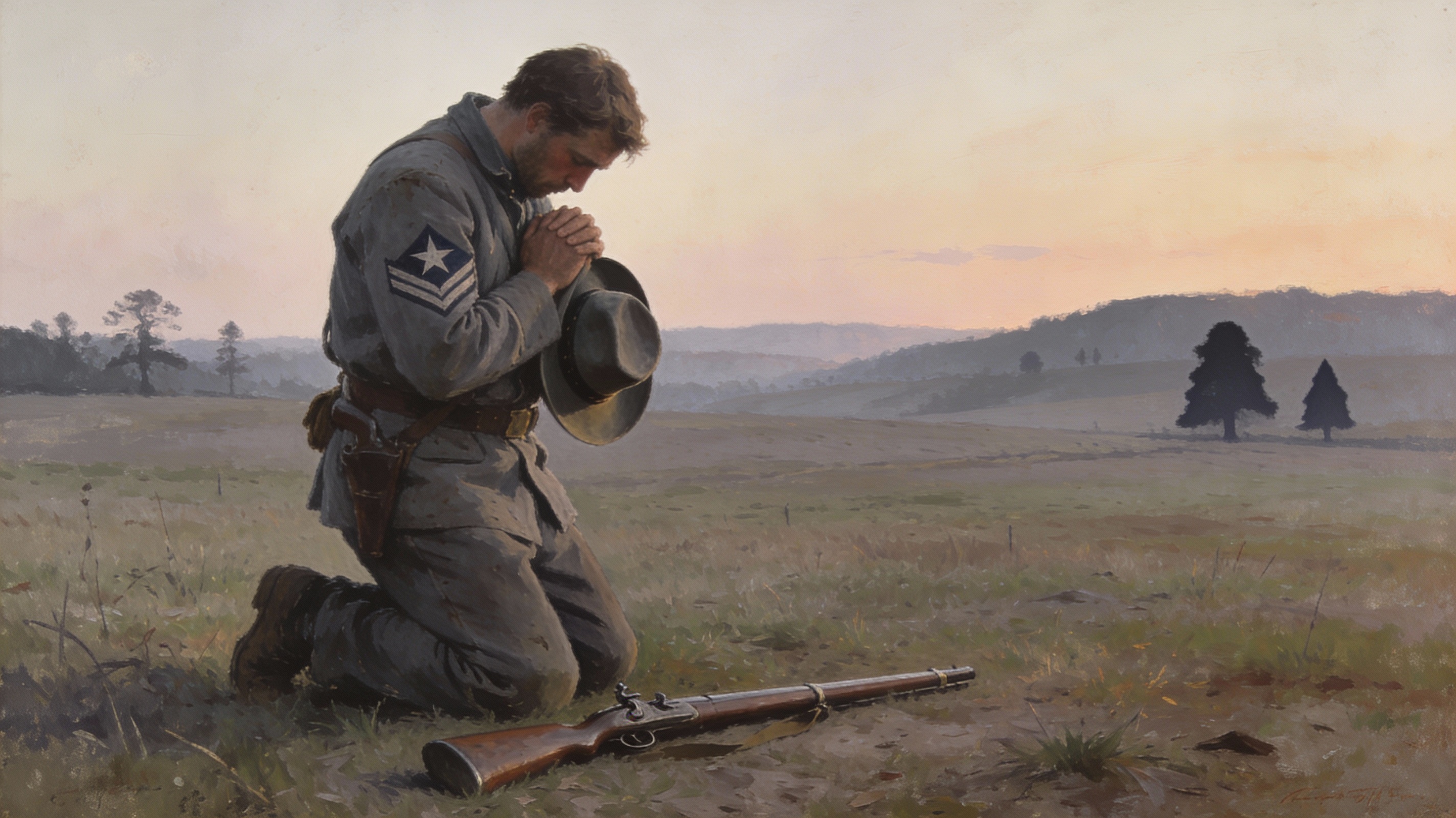
Sometimes the greatest answers come disguised as silence—or as surrender.

I asked God for strength, that I might achieve.
I was made weak, that I might learn humbly to obey.

I asked for health, that I might do greater things.
I was given infirmity, that I might do better things.

I asked for riches, that I might be happy.
I was given poverty, that I might be wise.

I asked for power that I might have the praise of men.
I was given weakness, that I might feel the need of God.

I asked for all things, that I might enjoy life.
I was give life, that I might enjoy all things.

I got nothing that I asked for—but got everything I had hoped for.
Almost despite myself, my unspoken prayers were answered.
I am, among all people, most richly blessed.

Sunday, November 16, 2025

The Spirit of Babylon Still Lives

The Spirit of Babylon Still Lives

The Spirit of Babylon Still Lives
In every age, Babylon builds new towers—but the Lamb is calling us out.

As I read Revelation 14:1–12, I can’t help but pause—captivated not only by the vision of the 144,000 standing with the Lamb on Mount Zion, but by the haunting echo of Babylon that lingers behind it. Babylon has always fascinated me. From the tower of Babel in Genesis 11, where humanity dared to “make a name” for itself, to the empire that rose in defiance against God and conquered His people, Babylon has stood as a timeless symbol of human pride and self-exaltation.

Though the ancient city was destroyed long ago by Medo-Persia, its spirit never really died. Babylon lives on—not in brick and stone, but in ideology. It is a spiritual kingdom that continues to seduce the world with the same lie that once filled Nimrod’s city: you can be like God.

The second angel’s message—“Fallen, fallen is Babylon the great”—is not merely a warning of destruction. It’s a wake-up call. A plea to recognize the Babylon that still surrounds us—and perhaps, still resides within us.

Thursday, November 13, 2025

When Truth Becomes Too Loud to Silence

When Truth Becomes Too Loud to Silence

When truth grips the heart, silence can no longer contain it.
“Then they called them in again and commanded them not to speak or teach at all in the name of Jesus. But Peter and John replied, ‘Which is right in God’s eyes: to listen to you, or to Him? You be the judges! As for us, we cannot help speaking about what we have seen and heard.’” — Acts 4:18–20

They tried to silence them. The same city that once shouted “Hosanna!” had shouted “Crucify Him!” not long before. Now, that same city whispered another word—“Hush.”

But Peter and John couldn’t hush. They had seen too much. Heard too much. Been changed too deeply.

When truth burns that close to your heart, silence feels like betrayal.

Tuesday, November 11, 2025

When Forty Years Led Me Home

When Forty Years Led Me Home

After forty years of wandering, Jesus turned a restless story into a homecoming of grace.

My name is Assdhy Lolowang, and I was born in a small town by the shore called Fakfak, Indonesia.

Growing up, I never truly knew what home meant. Every three years, my family moved — sometimes to a different neighborhood, sometimes to a different country. By the time I started to settle, pack-up time came again.

I never had what many people treasure: a childhood friend from the same street, the same school, the same church. My constants were my siblings, my parents, and a name that was spoken over me from the beginning: Jesus.

Wednesday, November 05, 2025

From Ai to AI

From Ai to AI: When Human Wisdom Forgets God

Joshua looking over the ruins of Ai under a dawn sky.
“Not by might, nor by power, but by My Spirit, says the Lord of hosts.” — Zechariah 4:6

There is a story in the book of Joshua that few remember, but it speaks volumes to our generation. After the miraculous fall of Jericho, Israel faced a smaller city—Ai. Confident and proud, they thought, “We can take this one ourselves.” They didn’t pray. They didn’t ask. They simply went. And they lost.

It wasn’t Ai’s strength that defeated them. It was Israel’s pride. Hidden sin in one man’s tent had silenced the favor of God over an entire nation. A small city became unconquerable because the people forgot where their strength came from.

When human wisdom forgets divine guidance, even the smallest obstacle becomes impossible.

Today, our world faces another “Ai”—but this one is spelled with capital letters: AI. Artificial Intelligence. It promises progress, power, and perfection. Yet beneath its brilliance lies the same temptation Israel faced—the illusion that we can win our battles without God.

Sunday, November 02, 2025

From Desert to Living Water — God’s Heart in Jeremiah 14

From Desert to Living Water — God’s Heart in Jeremiah 14

When the heart becomes a desert, God still longs to pour out living water.

Have you ever been to the desert of Nevada or Arizona? I used to live in Colorado. In the southwest corner of that beautiful state lies a place called Four Corners, where Colorado, Utah, New Mexico, and Arizona meet. Not far from there is a breathtaking place called Great Sand Dunes National Park.

Colorado is stunning — mountain ranges stretch across the west, forests breathe with life, rivers carve through valleys. But when you reach the Great Sand Dunes, it feels like you’ve stepped into another world. It’s dry, arid, endless. Miles and miles of sand. No trees. No shade. The air feels still, heavy. Everything looks thirsty.

That was Judah in the days of Jeremiah. Not the land — the heart of the people.

Wednesday, October 29, 2025

Seeing God’s Heart Again

Seeing God’s Heart Again

A reflection on Isaiah 58 — finding the heart of God in family and faith.

There are moments when I think I understand God. What He wants. What pleases Him. I fast, I pray, I give, I serve. But then Isaiah 58 stops me. Because in that chapter, God doesn’t correct the people’s religion—He exposes their hearts.

They were worshiping, yes. They fasted and called on His name. Yet they ignored the poor and quarreled among themselves. They did the right rituals but missed the heart of God. And I wonder—how often do we do the same in our families?

We can serve faithfully at church, lead Sabbath School, sing hymns together, and still walk past each other’s needs. We can speak about love and forgiveness while tension lingers at the dinner table. We can celebrate Sabbath yet hold bitterness in our hearts.

Saturday, October 25, 2025

Abide in His Love

Abide in His Love

Even when we cannot see Him, our Father never takes His eyes off His children.

I’ve been learning a lot lately about what it means to abide in God’s love. It’s easy to talk about trusting Him when everything feels close and visible. However, I believe that real abiding happens when God seems distant—when life feels hard, when hope seems out of reach—yet you still choose to walk in His will, believing that He is near.

A couple of days ago, Atchi, Nanan, Rarah, and I were given a task by our beloved queen, my wife, to buy groceries from a big store. From a young age, Farah and I have tried to teach our children to listen. Listening, to us, is one of the simplest and hardest lessons in life. It’s the foundation of abiding, to trust what you’ve been told, even when you walk out of sight.

The aisles of this store stretched long and wide. I handed their shopping list to Nanan and Rarah, gave them their own cart, and told them where to meet me when they were done.

Friday, October 24, 2025

Hebrew Vowels

     If you’ve ever looked at Biblical Hebrew and wondered how anyone can read it without vowels, you’re not alone.

    Originally, Hebrew was written with only consonants, and the vowel marks we see today (called niqqud) were added centuries later by the Masoretes to preserve pronunciation.

    These tiny dots and dashes hold immense meaning. They show not just how to say a word, but often why a form changes when it enters a construct phrase or loses stress.

    To study Biblical Hebrew well, it helps to know the vowel hierarchy—from the longest and most stable sounds down to the briefest, almost whispered ones.

Wednesday, October 22, 2025

Now Is the Time of the Spirit: Living in the Dispensation of Grace


Now Is the Time of the Spirit: Living in the Dispensation of Grace

There’s a line from Ellen G. White that has lingered in my mind all week:

“The dispensation in which we are now living is to be, to those that ask, the dispensation of the Holy Spirit.”

The Review and Herald, March 2, 1897, p.2306.

It’s simple, but it holds a truth that reaches deep into the heart of what it means to live for God today.


We Are Living in the Time of the Spirit

We often think of Bible times as something long past, the age of miracles, prophets, and visible divine power. But Scripture tells us that our time is not empty of God’s presence. We are living in a dispensation, a sacred season in salvation history, where the Holy Spirit is God’s chosen means of working in the world.

Friday, January 03, 2025

Why Trials Are the Key to Building a Holistic, Faith-Filled Life


When I arrived in America as a young teenager, I was introduced to video games for the first time. What began as innocent entertainment quickly turned into a powerful addiction. By the time I was in nursing school, I found myself glued to the screen, immersed in the adventures of the characters, completing quests, defeating bosses, and seeking the unknown.

What fascinated me most was the illusion of control and exploration. I envisioned myself as the hero, navigating through challenges and forging my destiny. But in reality, the game’s developers already knew how it began and how it would end. My role was simply to follow the predetermined path, yet I was consumed by the experience.

This addiction came at a cost. My studies suffered, my family was neglected, and my spiritual life was pushed to the background. I found myself filled with anger when I was defeated in the game or when my family criticized my addiction. The deeper I sank into this virtual world, the more I realized it wasn’t just a harmless escape—it was a trial, a battle that tested my faith, priorities, and character.

Friday, December 27, 2024

En Dash vs. Em Dash: The Tiny Details That Could Transform Your Writing

    Writing can be both an art and a science, a balance between style and clarity. One of the simplest yet most impactful ways to elevate your writing is by mastering punctuation. Among these tools, the en dash (–) and the em dash (—) stand out as subtle yet powerful marks that can shape the flow of your text. Yet, their differences and proper usage often leave writers scratching their heads. Let’s dive into their unique roles, when to use them, and how they can refine your writing.

The En Dash: Bridging Connections

    The en dash (–) is often described as a slightly longer hyphen, but its purpose is distinct. Think of it as a bridge—it connects things that are related yet separate. Here are its primary uses:

  1. Ranges of Numbers or Dates: When you want to express a range, such as "May–June" or "10–20," the en dash is your go-to. It subtly replaces the word "to."

  2. Connections or Contrasts: The en dash links related concepts, such as "the New York–London flight" or "the liberal–conservative debate."

  3. Complex Compound Words: In rare cases, en dashes appear in compound adjectives where at least one element is already hyphenated, like "pre–World War II era."

    Typing an en dash can be simple:

  • On Windows: Alt+0150
  • On Mac: Option + Hyphen

The Em Dash: Adding Drama and Emphasis

    The em dash (—), on the other hand, is the punctuation equivalent of a spotlight. Longer than the en dash, it commands attention and adds dramatic pauses or emphasis. Here’s when to use it:

  1. Parenthetical Statements: The em dash is a more informal alternative to parentheses or commas. For example: "Her latest novel—a thrilling mystery set in Venice—has received rave reviews."

  2. Interruptions in Thought: It can indicate a sudden break or shift in a sentence: "I thought I had locked the door—but I hadn’t."

  3. Adding Emphasis: Use it to draw attention to a final thought: "She knew one thing for certain—she was leaving."

    To type an em dash:

  • On Windows: Alt+0151
  • On Mac: Shift + Option + Hyphen

How They Differ from the Hyphen

    Both the en and em dashes are often confused with the hyphen (-), which has its own specific uses, such as joining words (e.g., "well-known") or splitting syllables. Remember: a hyphen is shorter and less versatile than its longer counterparts.

Avoiding Common Mistakes

    Even seasoned writers sometimes mix up dashes, but a few simple tips can help:

  • Use the en dash for ranges or connections where "to" or "and" fits naturally.
  • Reserve the em dash for breaks, emphasis, or parenthetical asides.
  • Avoid overusing the em dash, as it can make your writing feel fragmented.

Tying It All Together

    Mastering punctuation is about more than rules; it’s about clarity and precision. Just as understanding the difference between "e.g." and "i.e." sharpens your writing, knowing when to use the en and em dash ensures your text flows naturally. If you’re curious about "e.g." and "i.e.," check out this insightful post on the subject: Difference Between e.g. and i.e..

Final Thoughts

    The en dash and em dash are small tools that wield great power. By learning to use them correctly, you not only enhance your writing but also convey your message with style and professionalism. So next time you’re drafting a sentence, pause and consider—is it time for a dash?

Thursday, December 26, 2024

Rob Booker's interview with B The Trader


This interview with Rob Booker has gold in it. Here are the takeaways:

  1. The Myth of Quick Profits:

    • Booker challenges the popular belief that successful trading involves quick in-and-out trades.
    • He emphasizes patience and holding positions long-term as a more viable strategy for sustained success.
  2. Mindset Over Rules:
    • Trading is less about rigid rules and more about adopting a framework or perspective, such as being skeptical of companies that lack profitability.
    • Success comes from understanding risk management and maintaining discipline, not blindly following rules learned at conferences.
  3. The Importance of Emotional Control:
    • Booker discusses the need to develop habits that promote calmness and prevent frantic decision-making.
    • He highlights the significance of learning to "miss trades" and practicing patience to eliminate impulsive behavior.
  4. Focus on Process, Not Outcomes:
    • The video stresses the value of documenting trades, reflecting on them, and learning from experience.
    • Booker suggests that growth comes from steady improvement in habits rather than chasing immediate gains.
  5. The Role of Mentorship and Community:
    • Aspiring traders are encouraged to find mentors who have verifiable success and to share their trade journals for accountability and feedback.
  6. Philosophical and Practical Insights:
    • Booker draws parallels between trading and life, emphasizing that both require a focus on doing the "next right thing."
    • He also recommends trading small and avoiding over-leveraging, ensuring losses remain manageable.
  7. Holistic Approach to Success:
    • The discussion includes personal development, such as addressing toxic behaviors and improving emotional resilience, as key to becoming a better trader.

Here are practical rules to follow:

Mindset and Emotional Control:

  1. Detach from Outcome: Focus on executing trades well, not the results. Avoid emotional reactions to wins or losses.
  2. Eliminate Toxicity: Address personal habits or behaviors that may negatively impact your trading mindset.
  3. Slow Down: Avoid frantic decision-making. Rushed trades are often poorly thought out.

Risk Management:

  1. Trade Small: Use a trade size so small that losses won’t significantly impact your account. For example:
    • Set a Max Loss Rule (e.g., never lose more than 1-2% of your total account on any trade).
  2. Define Your Stop Loss: Before entering a trade, set a stop loss that protects against catastrophic losses.
  3. Avoid Over-Leverage: Ensure your account can handle market fluctuations without margin calls.


Preparation and Execution:

  1. Document Everything:
    • Screenshot and annotate trades.
    • Keep a trading journal with your entry/exit points, trade size, reasons for the trade, and outcomes.
    • Review weekly to identify patterns and areas for improvement.
  2. Follow a Framework:
    • Develop a strategy or framework (e.g., shorting overvalued stocks or buying quality companies at fair prices).
    • Understand that there are multiple ways to execute within a framework; flexibility is key.
  3. Practice Before Real Trades:
    • Use paper trading or small, low-risk trades to refine your skills and build confidence.

Patience and Discipline:

  1. Wait for the Right Setup:
    • Do not force trades. Look for setups that align with your strategy.
    • If you miss a trade, accept it and move on. The market will provide more opportunities.
  2. Hold Trades Longer:
    • Shift focus from quick gains to letting trades play out over days, weeks, or even months if your strategy supports it.
  3. Don’t Overtrade:
    • Limit the number of trades per day or week to avoid burnout and poor decision-making.

Accountability and Growth:

  1. Find a Mentor or Community:
    • Share your trades with a trusted mentor or group for feedback and accountability.
  2. Review and Reflect:
    • Analyze your trades regularly. Look for what worked, what didn’t, and why.
  3. Continuous Learning:
    • Read books, listen to podcasts, or watch educational content that aligns with your trading philosophy.


Execution Checklist:

  • Pre-Trade:

    1. ☑  Is this trade aligned with my strategy?
    2. ☑  Have I set a stop loss and calculated the risk/reward ratio?
    3. ☑  Am I trading within my position size limits?
  • Post-Trade:

    1. ☑  Did I follow my plan?
    2. ☑  What can I learn from this trade?

Key Principles:

  • Protect your capital at all costs.
  • Focus on building consistent habits, not chasing profits.
  • Trading is a skill that improves with time, patience, and discipline.

By adhering to these rules, you can create a structured and sustainable trading approach while minimizing emotional decision-making.

In all businesses, there are risks and gains. Do not gamble. Find your strategy and follow the rules.


Do this to glorify God. (Isaiah 61:1-3)

To preach good tidings to the poor,

To heal the brokenhearted,

To proclaim liberty to the captives,

To open the prison for those who are bound,

To proclaim the acceptable year of the Lord,

To proclaim the day of vengeance of our God,

To comfort all who mourn,

To console those who mourn in Zion,

To give them beauty for ashes,

To give them the oil of joy for mourning,

To give them the garment of praise for the spirit of heaviness,

That they may be called trees of righteousness,

The planting of the Lord

That He may be glorified.

(Isaiah 61:1-3 “The Spirit of the Lord God is upon Me, Because the Lord has anointed Me To preach good tidings to the poor; He has sent Me to heal the brokenhearted, To proclaim liberty to the captives, And the opening of the prison to those who are bound; To proclaim the acceptable year of the Lord, And the day of vengeance of our God; To comfort all who mourn, To console those who mourn in Zion, To give them beauty for ashes, The oil of joy for mourning, The garment of praise for the spirit of heaviness; That they may be called trees of righteousness, The planting of the Lord, that He may be glorified.”

The New King James Version (Nashville: Thomas Nelson, 1982), Is 61:1–3.
)

My Thoughts:

    God is so good to me. He loves me so much.

    When I reflect on these verses from Isaiah 61:1-3 “The Spirit of the Lord God is upon Me, Because the Lord has anointed Me To preach good tidings to the poor; He has sent Me to heal the brokenhearted, To proclaim liberty to the captives, And the opening of the prison to those who are bound; To proclaim the acceptable year of the Lord, And the day of vengeance of our God; To comfort all who mourn, To console those who mourn in Zion, To give them beauty for ashes, The oil of joy for mourning, The garment of praise for the spirit of heaviness; That they may be called trees of righteousness, The planting of the Lord, that He may be glorified.”

The New King James Version (Nashville: Thomas Nelson, 1982), Is 61:1–3.
, I wonder why they focus on the poor, the captives, and those who mourn. Then I realized: these verses describe the condition of humanity—my condition. Romans 6:23For the wages of sin is death, but the gift of God is eternal life in Christ Jesus our Lord.

The New King James Version (Nashville: Thomas Nelson, 1982), Ro 6:23.
says, "For the wages of sin is death..."

Jesus hugging a man
    I need to know that God loves me. I need healing for my sinful and broken heart. I need freedom from sin. I need a way out of the prison of my sinfulness. I need to hear about the Lord's pleasure and His acceptable year. I even need to hear about the day of vengeance.

    Let me pause here for a moment. Verse 2 To proclaim the acceptable year of the Lord, And the day of vengeance of our God; To comfort all who mourn,

The New King James Version (Nashville: Thomas Nelson, 1982), Is 61:2.
mentions "the acceptable year of the Lord" and contrasts it with "the day of vengeance of our God." Think about that for a second—an entire year of the Lord's favor versus a single day of vengeance. God is so good to me. He loves me so much that He wants me to know this: vengeance is not His focus. It’s a single day. Not 360 days, not eternity—just one day. Isn't that amazing? Thank You, Jesus!

    And then, God promises to comfort me in my mourning—the mourning for the death of self. He even allows me to take the time to mourn this loss. Then, He promises to exchange my ashes for beauty. How incredible is that? He will anoint me with the oil of joy and clothe me with the garment of praise.

    This garment of praise reminds me of the story of the prodigal son. But anyway, back to Romans 6:23For the wages of sin is death, but the gift of God is eternal life in Christ Jesus our Lord.

The New King James Version (Nashville: Thomas Nelson, 1982), Ro 6:23.
: "For the wages of sin is death, but the gift of God is eternal life in Christ Jesus our Lord."

    This is the blueprint. I first need to know that my Lord loves me. Not only does He love me, but He loves me so much that He gave His only begotten Son so I could be saved. In response, I’m called to share His love and proclaim His goodness to others.

    But how good is my God? Oh, He is more than good—He is love. If you haven’t seen my God and my Savior, I dare you to find Him. Jeremiah 29:13And you will seek Me and find Me, when you search for Me with all your heart.

The New King James Version (Nashville: Thomas Nelson, 1982), Je 29:13.
says, "You will seek Me and find Me when you search for Me with all your heart."

Tuesday, December 28, 2010

The Difference Between e.g. and i.e.?

A Simple Guide in understanding the differences between e.g. and i.e.

    The Latin abbreviations e.g. and i.e. are often used in English, but many people confuse their meanings or use them interchangeably. Knowing their proper usage not only improves clarity but also enhances your writing skills. Let’s explore their distinctions.

What Does e.g. Mean?

  • e.g. stands for exempli gratia, meaning "for the sake of example."
  • Use e.g. when providing examples or possibilities related to a topic.
  • Tip: Associate e.g. with "example given" to remember its purpose.

Example:
    "I enjoy outdoor activities (e.g., hiking, cycling, and kayaking)."

What Does i.e. Mean?

  • i.e. stands for id est, meaning "that is" or "in other words."
  • Use i.e. to clarify, explain, or rephrase a statement.
  • Tip: Think of i.e. as equivalent to "in essence."

Example:
    "I enjoy outdoor activities (i.e., anything that keeps me active and in nature)."

Key Usage Tips

  1. Placement:

    • e.g. and i.e. can appear inside or outside parentheses. In formal writing, they are typically used within parentheses.
      Example:
    • Formal: "I enjoy tropical fruits (e.g., mangoes, pineapples)."
    • Informal: "I enjoy tropical fruits, e.g., mangoes, pineapples."
  2. Format:

    • Always use lowercase letters (e.g., i.e.), even at the start of a sentence.
    • Include periods between the letters and follow the abbreviation with a comma.

    By mastering the difference between e.g. and i.e., you can write with greater precision and make your communication more effective. Next time you want to give examples or clarify a point, choose the right abbreviation and impress your readers!

Wednesday, September 22, 2010

Steps in Conversion

    I recently stumbled upon a powerful quote:

         "Repentance, faith, and baptism are the requisite steps in conversion."

Letter 174, 1909 Repentance, faith, and baptism are the requisite steps in conversion. Christ Himself was baptized by John. When John would forbid Him, saying, “I have need to be baptized of Thee, and comest Thou to me?” Jesus replied, “Suffer it to be so now: for thus it becometh us to fulfil all righteousness.” [Matthew 3:14, 15.]

Letters and Manuscripts—Volume 24 (1909), Lt 174, 1909, par. 2.

    It got me thinking. Imagine this: you welcome a beautiful baby into the world, weighing 8 pounds and 5 ounces. A year goes by, and the baby is still the same weight. Another year passes, and nothing changes—no growth, no development, no progress. Wouldn’t you be alarmed? Concerned? Heartbroken?

    Now, here’s the tough question: could this be a mirror of our spiritual lives as Seventh-day Adventists?

    Many of us have been in the church for years—some for 8, 10, even 20 years—sitting in the same pews, singing the same hymns, and listening to sermon after sermon. Outwardly, we might appear to be solid, “converted” Christians. But has there been real growth? Has our faith matured?

    The truth is sobering: complete conversion is something we will only fully realize when Jesus returns. But here’s the challenge—conversion is not a one-time event; it’s a journey, a daily process of surrender and transformation. Yet so often, we convince ourselves that we’re spiritually wealthy, that we’ve “arrived” because of what we know or how we act. But listen to what Jesus says:

        "You do not know that you are wretched, miserable, poor, blind, and naked—I counsel you to buy from Me gold refined in the fire, that you may be rich; and white garments, that you may be clothed, that the shame of your nakedness may not be revealed; and anoint your eyes with eye salve, that you may see. As many as I love, I rebuke and chasten. Therefore be zealous and repent.”

Revelation 3:17-19 (NKJV) Because you say, ‘I am rich, have become wealthy, and have need of nothing’—and do not know that you are wretched, miserable, poor, blind, and naked— I counsel you to buy from Me gold refined in the fire, that you may be rich; and white garments, that you may be clothed, that the shame of your nakedness may not be revealed; and anoint your eyes with eye salve, that you may see. As many as I love, I rebuke and chasten. Therefore be zealous and repent.

The New King James Version (Nashville: Thomas Nelson, 1982), Re 3:17–19.

    This is a call to wake up. Every day, we’re invited to commit our lives to Christ anew, to seek His wisdom, and to grow in Him. When Jesus says, “Buy from Me gold refined in the fire”, He’s asking us to immerse ourselves in His Word, to listen for His voice, and to embrace His refining work in our lives.

    Ellen G. White puts it beautifully in Patriarchs and Prophets:

        "God speaks to His people in blessings bestowed; and when these are not appreciated, He speaks to them in blessings removed, that they may be led to see their sins, and return to Him with all the heart."

Patriarchs and Prophets, p 470 The removal of their beloved leader would be a far stronger rebuke to Israel than any which they could have received had his life and mission been continued. God would lead them to feel that they were not to make the life of their future leader as trying as they had made that of Moses. God speaks to His people in blessings bestowed; and when these are not appreciated, He speaks to them in blessings removed, that they may be led to see their sins, and return to Him with all the heart.

Ellen Gould White, The Story of Patriarchs and Prophets as Illustrated in the Lives of Holy Men of Old, vol. 1, Conflict of the Ages Series (Pacific Press Publishing Association, 1890), 470.

    That quote humbles me. How often do we, in our pride and self-reliance, push God to the margins? How often do we justify our sins or rely on our own strength? And yet, God, in His infinite love, sometimes withholds blessings—not to punish us, but to bring us back to Him.

    This reminds me of my own need for daily repentance. Conversion isn’t just a one-time event marked by baptism; it’s a daily dying to self and living anew in Christ. Without repentance, faith, and a continual commitment to baptism’s deeper meaning, we risk stagnation—remaining like that unchanged 8-pound baby, unable to grow or mature spiritually.

    Jesus’ words echo in my heart:

        "As many as I love, I rebuke and chasten. Therefore be zealous and repent."

Revelation 3:19 As many as I love, I rebuke and chasten. Therefore be zealous and repent.

The New King James Version (Nashville: Thomas Nelson, 1982), Re 3:19.

So here’s my prayer: that each day, we take the steps toward true conversion. That we repent, have faith, and live out the meaning of our baptism. Let’s not settle for spiritual complacency but strive for growth, trusting that Christ’s love will sustain and transform us.

Let’s grow together in Him.

– A.F. Lolowang

Evangelism Tips: Making Bible Studies Effective and Heartfelt

When sharing the Word of God, it is essential to not only impart knowledge but also engage hearts and minds. Here are some practical tips to elevate your Bible studies and appeals, helping others connect deeply with the message.


1. The First Issue is Usually Not the Real Issue

Often, when someone raises an objection or question during a Bible study, it’s not the true concern. They might express doubts about a doctrine or a teaching, but their real struggle could be something deeper, such as fear of change, past hurt, or the challenge of surrendering to Christ.

  • Tip: Listen with empathy. Avoid jumping to conclusions or answering too quickly. Instead, ask open-ended questions like, “Can you share more about why this concerns you?” or “How does this teaching make you feel?”
  • Why it matters: By addressing the underlying issue, you can build trust and guide them toward a genuine understanding of God’s truth.

2. Enhance Desire When Information and Conviction Are Present

Sharing information is not enough—conviction must follow. However, even when someone is convicted by the truth, their desire to act on it might need encouragement.

  • Tip: Paint a picture of what life could look like when they fully embrace God’s Word. Use testimonies, promises from Scripture, and personal stories to inspire action. For example, say:
    “Imagine the peace and joy you’ll experience when you let Christ lead every area of your life.”
  • Why it matters: People often need help bridging the gap between knowing the truth and living it out.

3. Listen for the Real Issue

Effective evangelism requires active listening. While you may have a structured Bible study prepared, be attentive to verbal and non-verbal cues that reveal deeper struggles or questions.

  • Tip: Practice “reflective listening.” Repeat back what they’ve said to co
    nfirm your understanding. For example, “It sounds like you’re unsure how this teaching fits with what you’ve always believed. Is that right?”
  • Why it matters: When people feel heard and understood, they’re more likely to open their hearts to the message.

4. Most People Struggle with Application, Not Information

For many, the challenge isn’t understanding the Bible but applying its teachings to their lives. They might know what the Bible says about forgiveness, Sabbath-keeping, or faith, but figuring out how to live it daily can feel overwhelming.

  • Tip: Offer practical, actionable steps. For instance, if you’re studying about prayer, suggest starting with a simple prayer journal. If discussing the Sabbath, share ideas for how they can prepare and make it a delight.
  • Why it matters: Application transforms knowledge into growth. By making biblical principles actionable, you help people see how the Word can change their lives.

Simplify the Message

When giving a Bible study, simplicity is key. Jesus Himself spoke in parables and used illustrations that everyday people could relate to. Likewise, our teaching should avoid complex theological terms or concepts that might confuse.

  • Tip: Break down doctrines into bite-sized ideas. Use relatable analogies and focus on the essentials. For example, when teaching about salvation, you might say:
    “Think of salvation like a gift—God is offering it to you, but you have to accept it and unwrap it to fully enjoy it.”
  • Why it matters: A simple message is more likely to resonate and stick with your audience, especially those new to the Bible.

Inspire Hunger for the Word

The goal of every Bible study is not just to inform but to inspire a lifelong hunger for God’s Word. Your role as a teacher is to guide them toward a personal connection with Scripture.

  • Tip: End each study with a question or challenge that invites them to explore further. For example:
    “This week, read John 15 and write down what it means to you to abide in Christ. Let’s talk about it next time.”
  • Why it matters: People grow spiritually when they begin seeking God for themselves. By encouraging exploration, you empower them to take ownership of their faith journey.

Conclusion

Evangelism is not just about sharing information; it’s about leading people to experience transformation. By addressing the real issues, enhancing desire, simplifying the message, and inspiring a hunger for the Word, you can make your Bible studies more impactful. Remember, the ultimate goal is to guide others toward a closer relationship with Christ, where they not only understand the truth but live it with joy and confidence.

As you continue sharing God’s Word, may you be blessed with wisdom and love to lead others into His marvelous light.

Friday, September 17, 2010

Quotes: Dr. Samuel Koranteng Pipim

Among some of the memorable quotes from Pipim's sermons and lecture series are the following:

  • “To change the world, you must first be changed.”


  • “The complacency of success is the first step to mediocrity.”


  • “Excellence is a journey, not a destination.”


  • “There’s no alternative to excellence; without it we’re doomed.”


  • “Excellence is a winsome lifestyle. Therefore be nice to people.”


  • “Learn to think for yourself, otherwise somebody will do the thinking for you."


  • “Those who read are those who lead. But those who write keep the leaders right.”


  • “The pen of truth is the most effective weapon against the arrogance of power.”


  • “Lead by actions, not by directions.”


  • “Leaders think and act. Puppets blindly follow policies and polls.”


  • "Don't be flattered by your position. It is your character and accomplishments that count."


  • "Discouragement is my encouragement."


  • "A goal without a deadline is a dream."


  • "In a culture of theological pluralism, biblical teaching is controversial and divisive."


  • “The silent majority are not silent. Their voices of apathy are louder than the courage of their convictions.”


  • "Samuel Koranteng-Pipim" Wikipedia: The Free Encyclopedia. 27 Aug. 2010. 17 Sept. 2010. <http://en.wikipedia.org/wiki/Samuel_Koranteng-Pipim>.

    Thursday, September 16, 2010

    7 Steps to Overcome Sin

    A-dmit your sin
    B-elieve the possibility to win
    C-laim the victory over it
    D-ecide to surrender it
    E-ngage in a relationship with God
    F-orget the sin and let
    G-od be your guide

    7 steps over sin. GB. :)